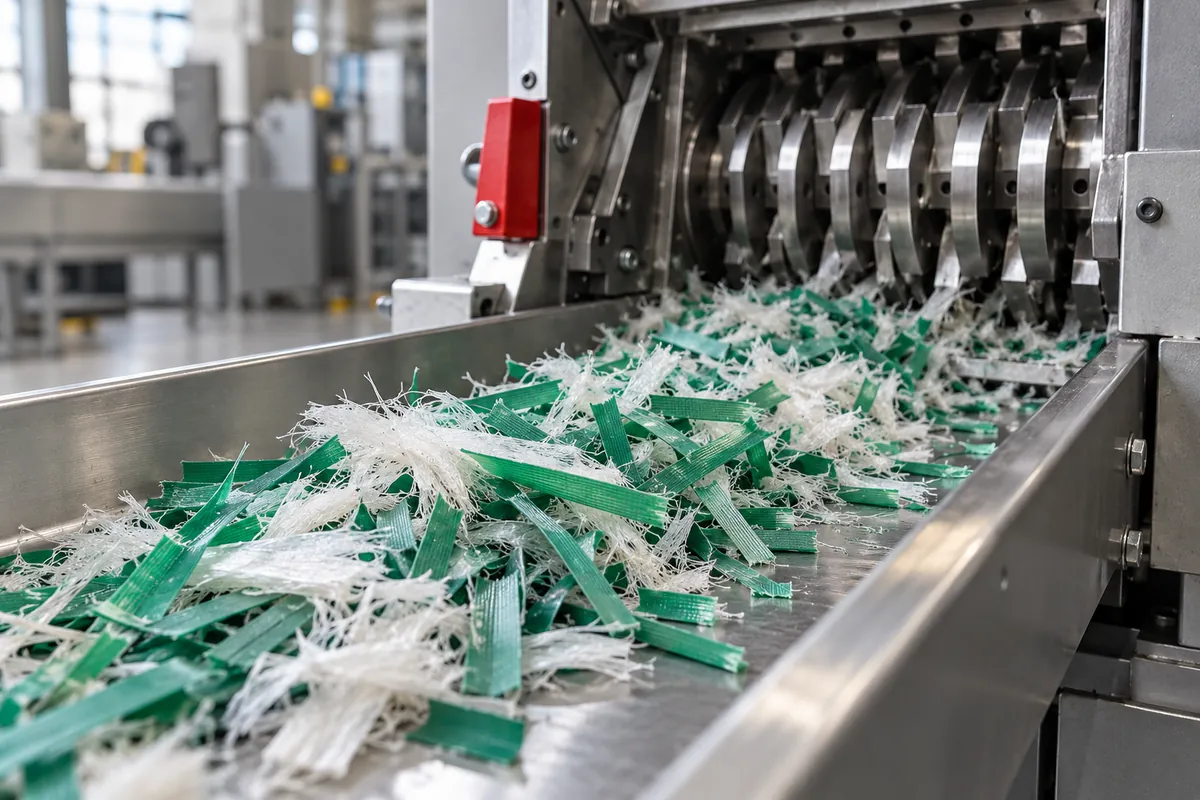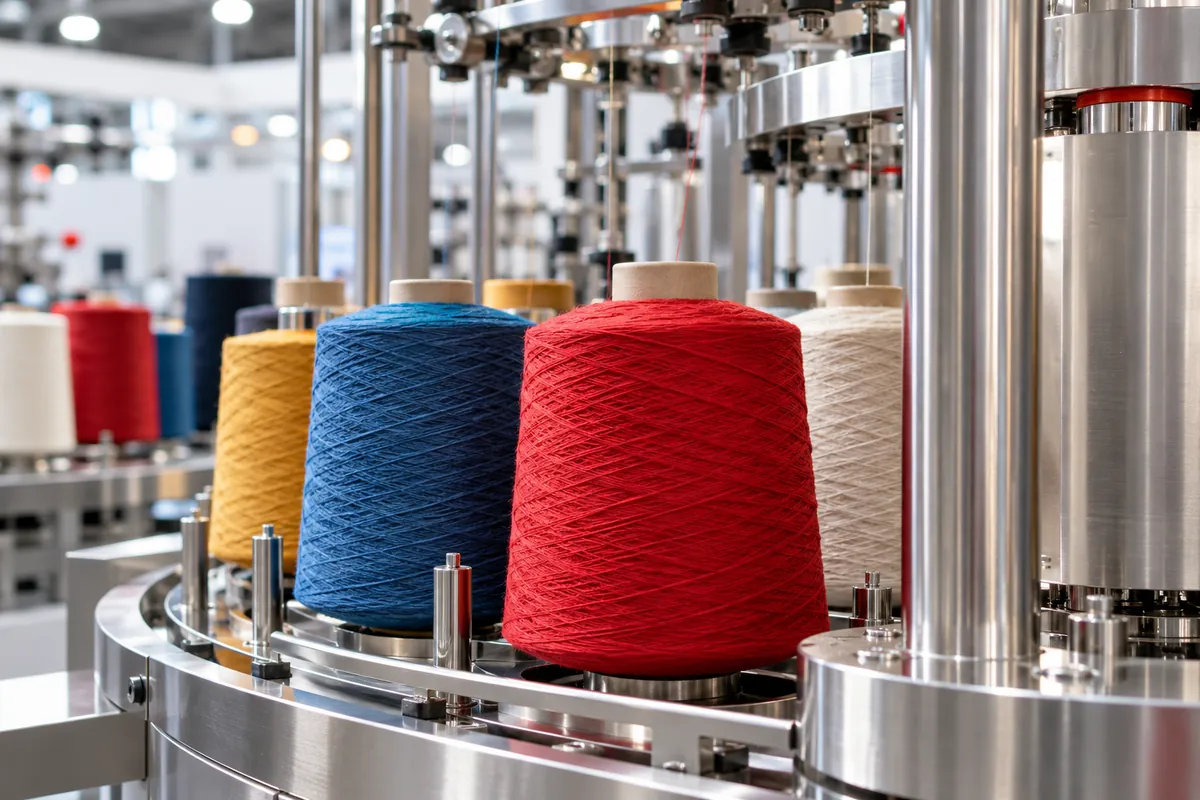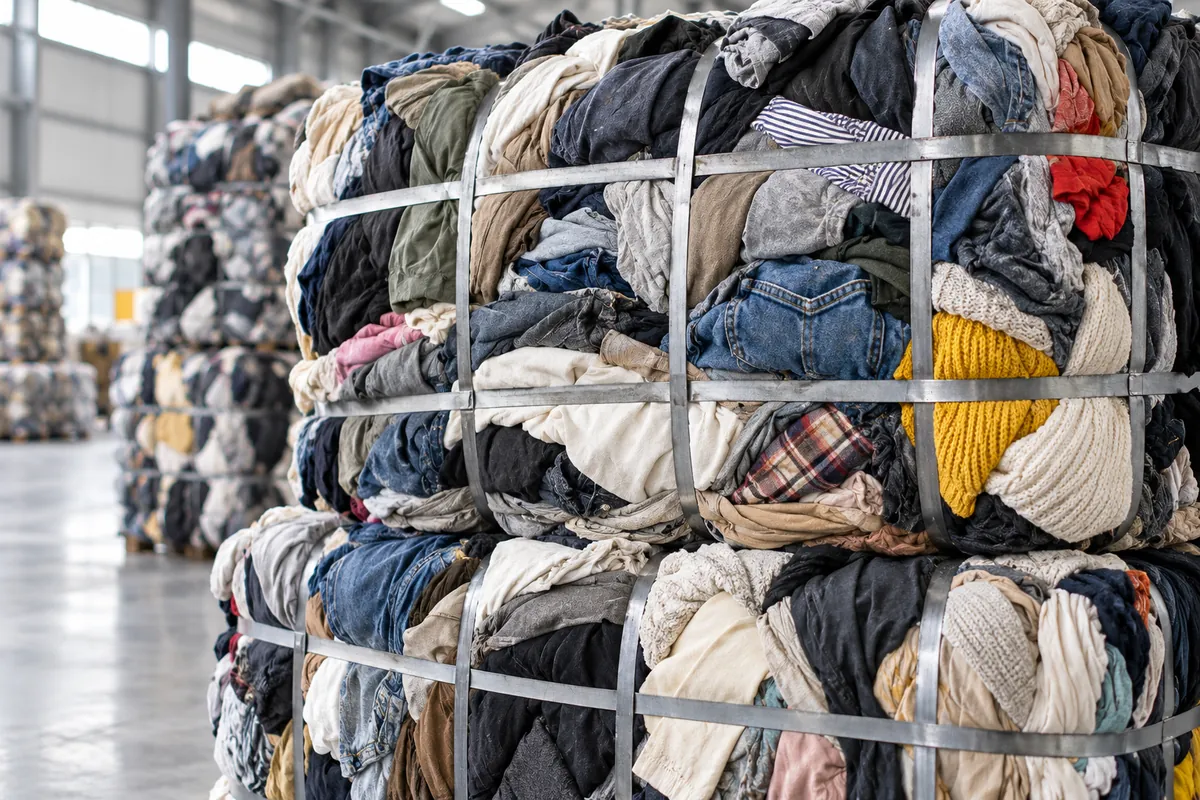

The visible stars of any recycling line are usually the cutters, shredders and granulators. Yet whether those machines run efficiently and safely depends largely on the often overlooked equipment that feeds them: metal-detecting infeed belts and the intermediate conveyors between machines. However carefully plastic and textile waste has been collected and sorted, it can still contain metal parts and uneven clumps. This article looks at what these two pieces of equipment do in the line under three headings: protecting blades, steadying the feed and improving safety.
Why metal is the biggest threat to cutting machines
In plastic waste, wire fragments, metal clips and buckles, nuts and bolts and packaging staples are common contaminants. In textile waste, zips, buttons, rivets and metal trims are the familiar culprits. When these items reach the cutting zone of a guillotine or rotary cutter, they can chip, break or suddenly blunt the knives, upset the blade gap and send shock loads through the bearings and drive.
The consequence is not just a set of blades but unplanned downtime, repair time and lost output. Equipment suppliers' own publications for the sector also point to the high repair and downtime costs that metal causes in shredders and granulators. Metal that ends up in the cut product creates further problems downstream, for example in fibre opening or extrusion. Catching metal before it reaches the cutting zone is therefore one of the basic principles of line design.
How a metal detector belt works
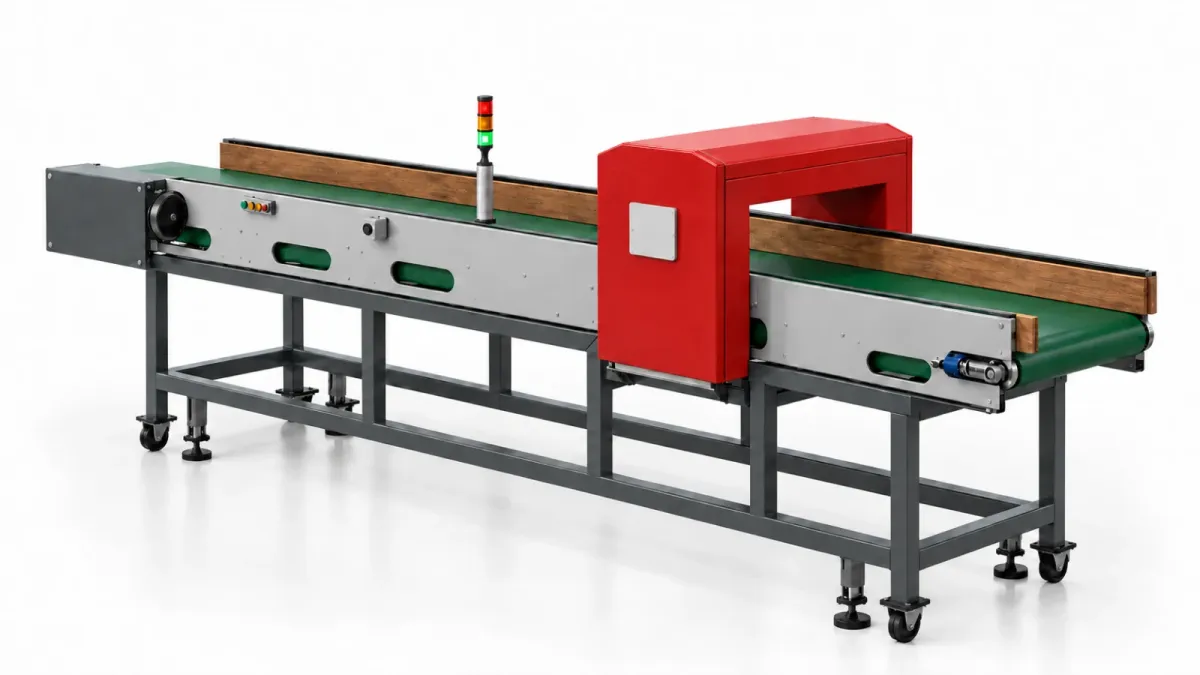
A metal detector belt consists of a detector unit integrated into the infeed conveyor ahead of the cutting machine. As material passes through the opening of the detector, usually a tunnel-type unit, any metal it contains disturbs the electromagnetic field and the system raises an alarm. The signal stops the belt or diverts the affected section, and the operator removes the item before it reaches the cutting zone.
The main factors that determine how well these systems perform are:
- Detector aperture: The opening must be wide enough for the material flow to pass freely, but an oversized aperture can reduce sensitivity.
- Belt material: The belt running through the detector must not contain metal fasteners or reinforcements, or the system will keep raising false alarms. That is why belts made specifically for metal detector applications are used.
- Stop and reject logic: How quickly the belt stops after an alarm, and how the metal is removed, decide whether the item reaches the cutting zone or not.
- Regular testing: Periodic checks with test pieces confirm that sensitivity is being maintained.
Mıhçıoğlu Makine's MDB-700 metal detector belt, for instance, is an example of this kind of infeed equipment: it sits in front of the cutting machines and uses a belt specially manufactured for the metal detector.
Intermediate conveyors: a steady, even feed
A cutting machine's capacity and cut quality are directly linked to how evenly it is fed. A sudden heap of material on the belt overloads the motor, disrupts cut length and can cause blockages; an intermittent feed leaves the machine running empty and wastes capacity.
Intermediate conveyors take on several roles here:
- They link equipment at different heights and positions by carrying material between machines,
- They spread material across the belt width so that a more even layer reaches the cutter,
- They act as a buffer that smooths out short-term fluctuations,
- They provide an area where operators can inspect the material and pick out foreign objects.
When specifying an intermediate carrier belt for a line, belt width relative to the cutter's working width, the ability to synchronise belt speed with cutting speed, and ease of cleaning and maintenance should all be considered together.
Safety and line control
Conveyors may look less dangerous than cutting machines, but the nip points at drums and rollers carry serious risks. Key practices for line safety include guarding drums and return points, emergency stop buttons or pull-wire switches accessible along the line, interlock logic that automatically stops the infeed conveyors when a downstream machine stops, and isolating and locking out all energy sources before maintenance. To put these design decisions on a systematic footing, ISO 12100:2010, which sets out general principles for risk assessment and risk reduction in machinery safety, is a widely used reference.
Frequently Asked Questions
What is the difference between a magnet and a metal detector?
Magnetic separators only capture ferrous (magnetic) metals. Metal detectors can also detect non-magnetic metals such as aluminium and stainless steel, which is why a metal detector is usually the preferred option for protecting blades.
Where should the metal detector be placed in the line?
The first and most important position is the infeed conveyor of the first cutting or shredding machine. Some plants add a second checkpoint ahead of the granulator or extruder to catch embedded metal exposed during pre-cutting.
Does every line need an intermediate conveyor?
Not necessarily. But where there is distance or a height difference between machines, where the feed arrives in surges, or where a picking area is needed, an intermediate conveyor makes a significant contribution to the stability of the line.