
In textile and plastic recycling, reducing waste to a size that suits the next process is one of the steps that shapes the efficiency of the entire line. For long, fibrous and flexible waste, the guillotine cutting machine is one of the most common tools for the job. The topic is gaining weight in Europe as well: EU member states have been required to collect textile waste separately since 1 January 2025, and the revised Waste Framework Directive, which entered into force on 16 October 2025, gives member states 30 months to set up extended producer responsibility (EPR) schemes for textile and footwear products. As separately collected volumes grow, so does the need for cutting capacity to process them. This article explains what a guillotine cutting machine is, how it works and where it is used in recycling lines.
What is a guillotine cutting machine?
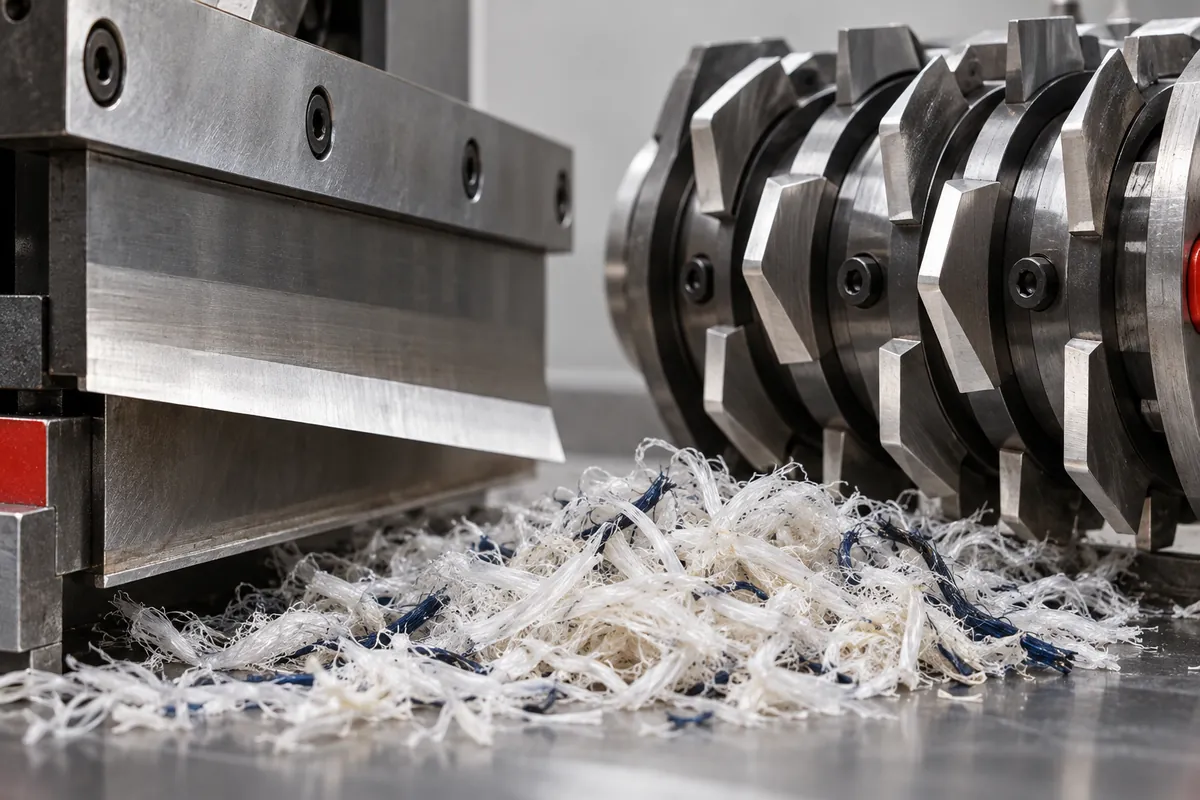
A guillotine cutting machine is a machine in which a moving blade passes a fixed counter knife in a linear motion, cutting the material with a scissor action. It takes its name from the downward stroke of the blade. While it shares the basic idea with guillotines used in paper and print, recycling models serve a different purpose: rather than making occasional large cuts, they chop material fed continuously from a conveyor into repeatable lengths, with many strokes per minute.
This design is particularly well suited to long-fibre and yarn-like materials. Because the material passes a single cutting line on every stroke, cut length is determined largely by the feed step, which makes it easier to keep the size distribution of the output under control.
How does it work?
The operation of a guillotine cutter in a recycling line can be summarised in four stages:
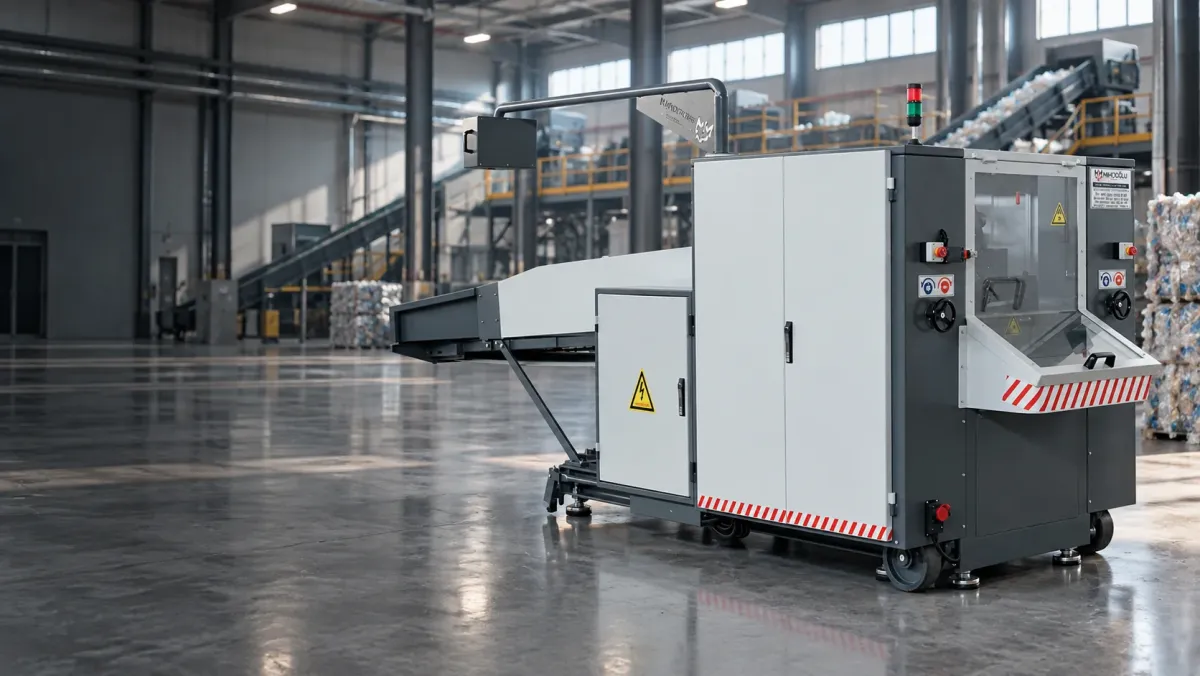
- Feeding: Material is carried into the machine on an infeed conveyor. Spreading it as evenly as possible across the belt has a direct impact on cut quality. Many lines place a metal detector ahead of this conveyor.
- Length setting: How far the belt advances between strokes defines the length of each cut piece. On modern machines this is set from a control screen.
- Cutting: A drive mechanism moves the blade periodically towards the fixed counter knife. The gap between the two blades and their sharpness are decisive for a clean cut.
- Discharge: Cut pieces are collected in a chamber, on a conveyor or in a pneumatic transfer line and passed on to the next machine.
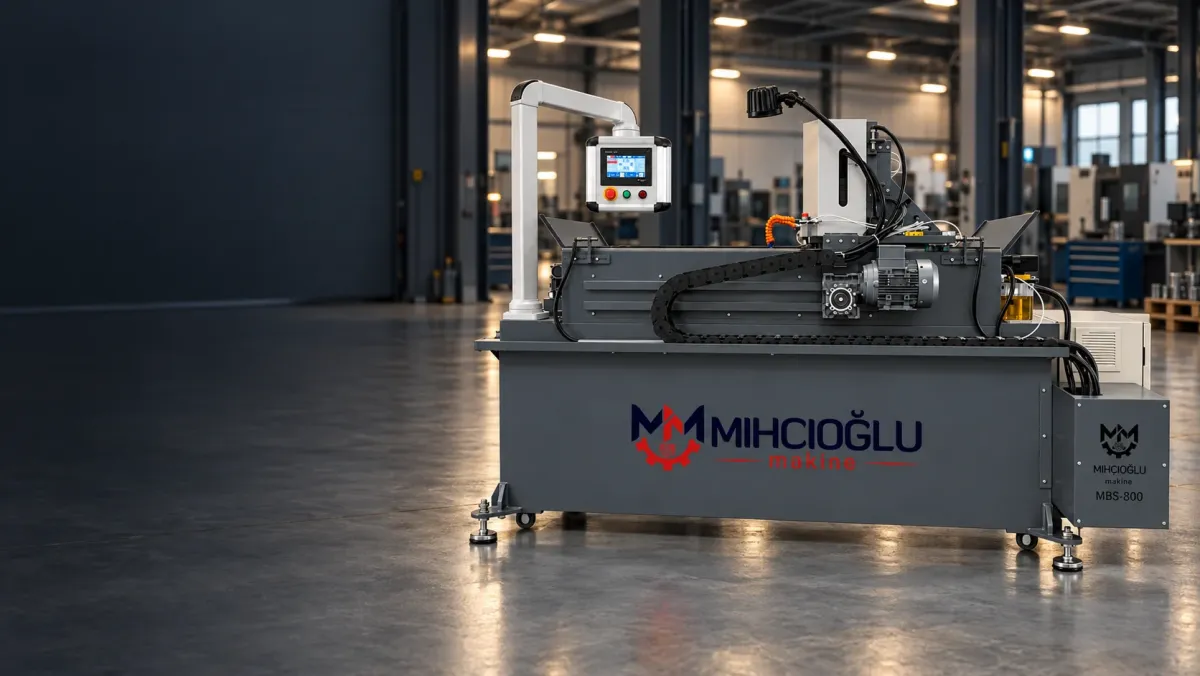
As a concrete example, the manufacturer of the MCT60 guillotine cutting machine, built in Gaziantep, Türkiye, lists a 600 mm working width, a cutting speed of 220 rpm, 22.5 kW installed power, cut lengths of 5–36 mm and a capacity of 1,000–3,000 kg/h depending on the material. Dimensions and settings for the material on the conveyor are controlled from a 10-inch screen, the blades are replaceable and the cut product is collected in a protected chamber.
Where is it used in recycling?
Guillotine cutters are most often chosen for materials whose length and flexibility cause wrapping or irregular cuts on other machines:
- Textile waste: Polyester, acrylic and blended fabric trimmings, and cutting-room waste from garment production.
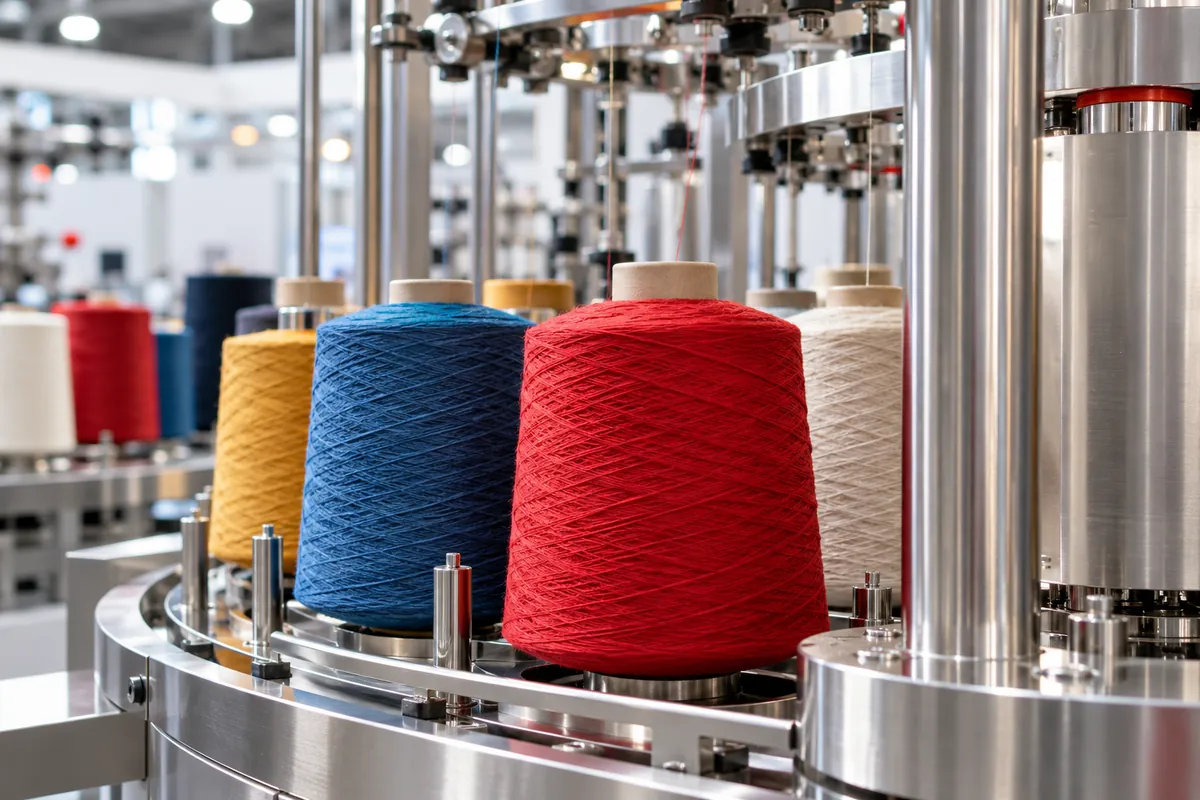
- Yarn and fibre waste: Bringing spinning waste down to a length suitable for fibre opening (garnett) machines.
- Technical fibres: Manufacturers also list technical materials such as glass fibre among their applications.
- Plastic fibres and strips: PET- or PP-based fibre, strapping and yarn waste.
The cut material typically moves on to fibre opening, re-spinning, filling material, nonwoven production or, in plastics recycling, agglomeration and extrusion. All of these processes expect a consistent piece size at the inlet, and delivering that consistency is precisely the guillotine's role in the line.
Strengths and limitations
The main strengths of guillotine cutting are an adjustable, repeatable cut length, controlled cutting of fibrous materials and a relatively simple blade arrangement. Its limitations: cut quality depends on even feeding; blades need regular sharpening and the blade gap must be maintained; and because metal parts can severely damage the knives, metal separation ahead of the cutter is essential. Very hard, bulky items are usually pre-processed in a shredder or crusher before they reach a guillotine.
What to look for when choosing one
When assessing a guillotine cutter, check that the working width matches the conveyor width in your line, what cut-length range is achievable, which material the stated power and capacity figures refer to, how blade changes and sharpening will be handled, and what guards and safety interlocks protect the cutting zone. Where possible, ask for a trial cut using a sample of your own waste: it is the most reliable way to see how catalogue figures translate to real operation.
Frequently Asked Questions
What is the main difference between a guillotine and a rotary cutting machine?
In a guillotine, the blade cuts with a linear, periodic stroke; in a rotary machine the knives sit on a rotating rotor and cut in a continuous rotary motion. Guillotines stand out in applications where cut length needs to be set directly via the feed step.
How is the cut length adjusted?
Cut length is defined by how far the infeed conveyor advances between two strokes. On machines with a control screen the value is entered on the panel; the achievable range depends on the machine design.
How often should the blades be sharpened?
There is no single correct interval. It depends on how abrasive and contaminated the material is and on operating hours. Declining cut quality, rising motor load and crushed fibre ends are the main signs that sharpening is due.