
Textile recycling is often spoken of as a single process, yet the sector uses very different technologies. The basic dividing line is whether fibre is recovered physically or by breaking down its chemical structure. The European Commission's Joint Research Centre (JRC) noted in its 2023 techno-scientific assessment of management options for used and waste textiles in the EU that textile recycling today is largely about turning clothing and home textiles into cleaning rags and insulation, while closed-loop facilities are only now emerging, mainly for post-industrial waste. Understanding where mechanical and chemical routes fit in that picture is essential for investment decisions.
Mechanical recycling: recovering fibre as fibre
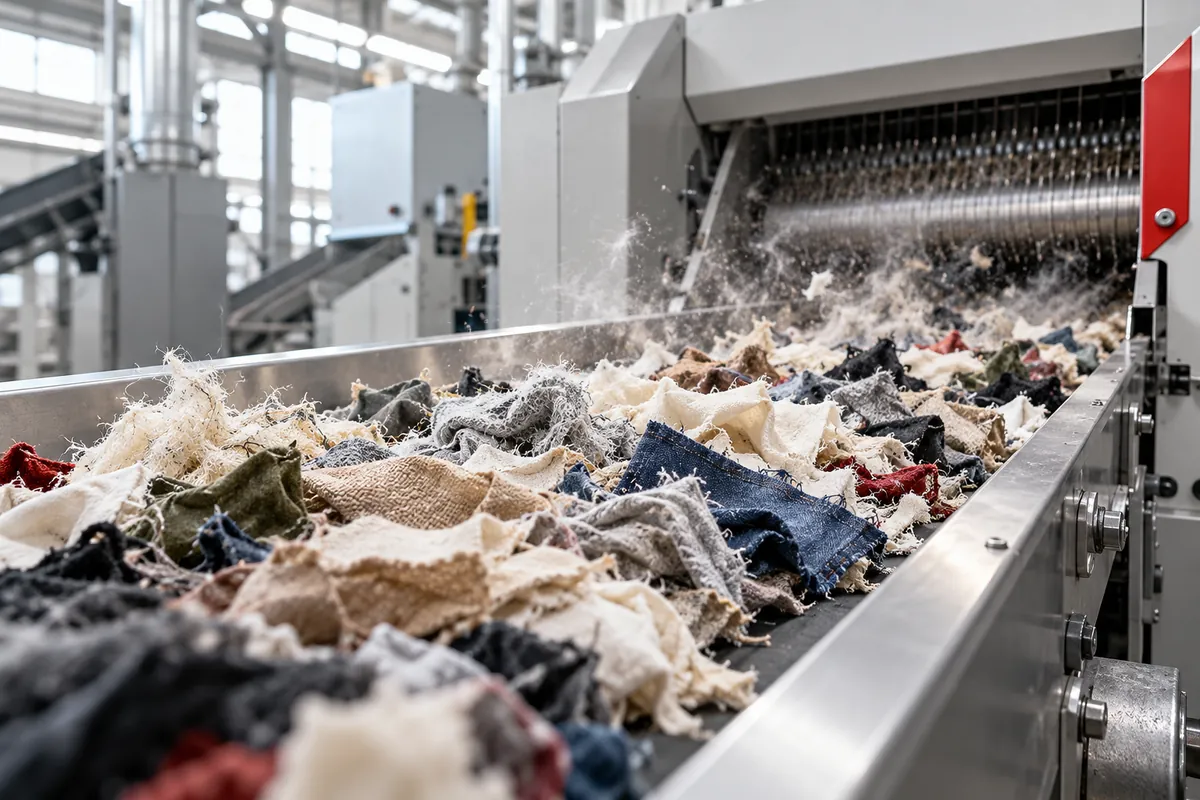
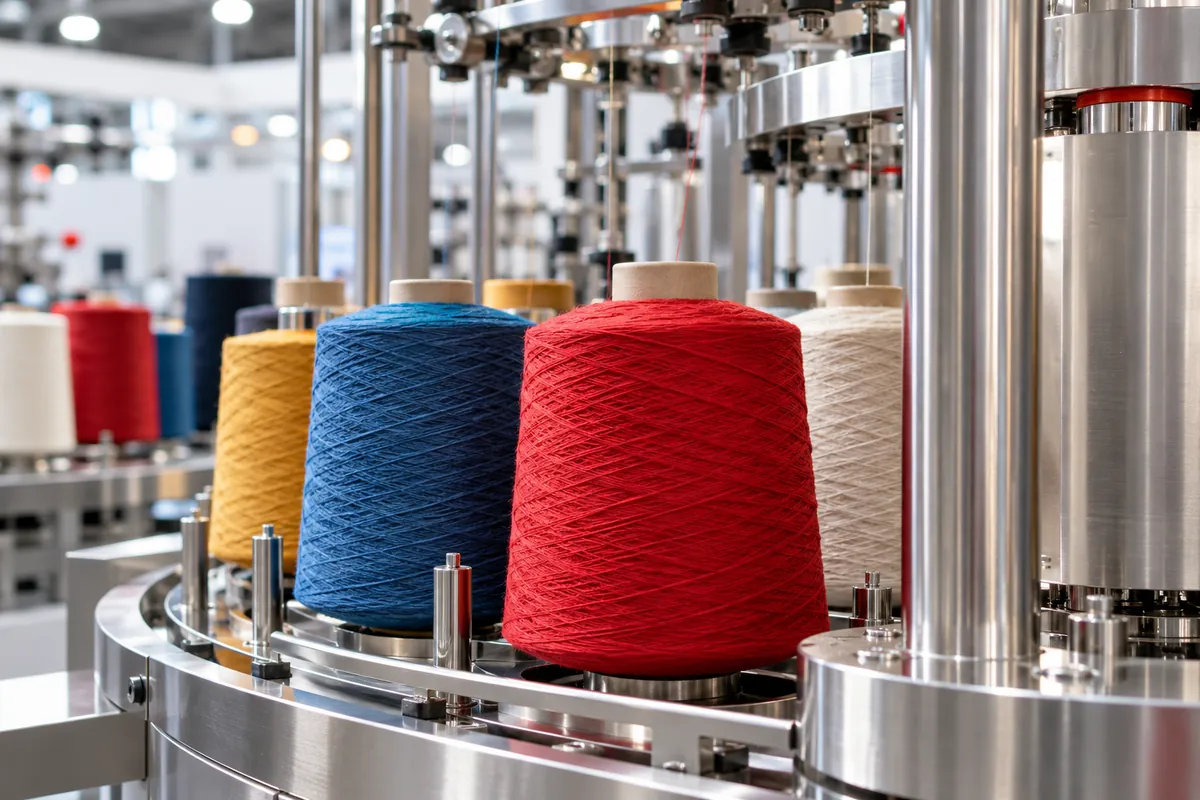
In mechanical recycling, textiles are turned back into fibre through physical steps such as cutting, tearing (opening) and carding. No chemicals are used and the polymer structure stays the same. The resulting fibre goes into nonwovens, insulation and filling materials, open-end spinning or, depending on quality, new fabrics.
- Strengths: relatively low capital and energy needs, proven technology, and colour can be retained in dyed material, reducing the need to re-dye.
- Limits: fibre length is shortened during opening, so recycled fibre is often blended with virgin fibre. Quality drops quickly with mixed-fibre or contaminated input.
- Suitable fibres: single-fibre, colour-sorted streams of cotton, wool, acrylic and polyester.
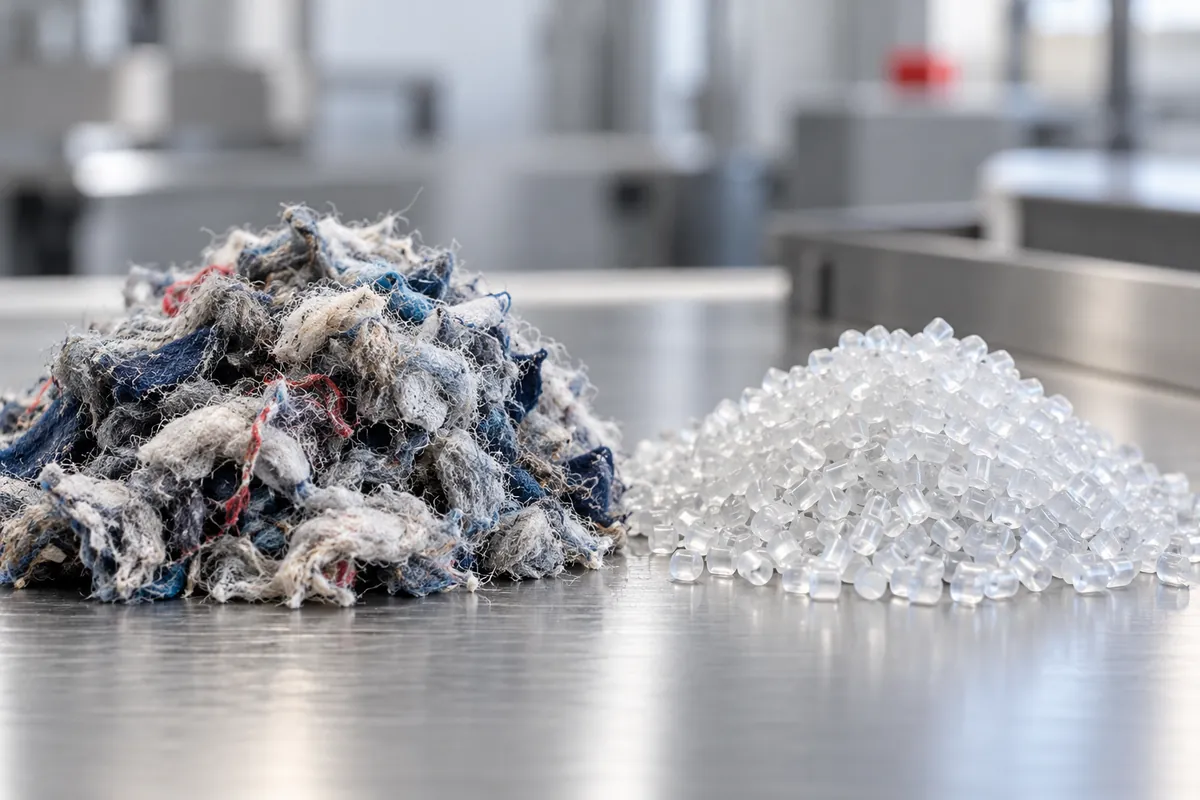
For thermoplastic fibres such as polyester and polyamide, a variant of the mechanical route is melting the material into pellets. This is close to plastics recycling and needs high-purity, single-polymer input.
Chemical recycling: rebuilding the polymer or the cellulose
Chemical recycling dissolves or breaks down the polymer that forms the fibre and turns it into a reusable feedstock. Three main approaches stand out:
- Depolymerisation: polymers such as polyester (PET) or polyamide 6 are broken down into monomers, purified and repolymerised. The output can approach virgin quality.
- Solvent-based purification: the polymer is dissolved in a suitable solvent without breaking its chains, separated from dyes and additives and then recovered.
- Cellulose recovery: cotton-rich waste is dissolved into pulp and used as feedstock for regenerated cellulose fibres such as viscose or lyocell.
The main promise of chemical routes is turning blends and coloured material, which mechanical recycling struggles with, into high-value feedstock. On the other hand, these technologies require more capital, energy and chemical management, and many are still scaling up. With cotton-polyester blends, the two components must be separated, which raises open questions about yield and economic viability.
Comparison: which fibre suits which route?
| Criterion | Mechanical | Chemical |
|---|---|---|
| Process | Cutting, opening, carding; melting where applicable | Depolymerisation, dissolution, cellulose pulping |
| Suitable input | Clean, single-fibre, colour-sorted streams | Polyester, polyamide, cotton; some blends |
| Output | Recycled fibre or pellets | Monomers, polymer or cellulose pulp |
| Maturity | Widespread and proven | Much of it still scaling up |
| Input sensitivity | Highly sensitive to blends and contamination | Sensitive to additives, elastane and coatings |
In practice the two routes are seen as complementary rather than competing. Clean, uniform post-industrial waste can be processed economically on mechanical lines, while mixed streams unsuitable for mechanical recycling could in future be directed to chemical plants.
The waste hierarchy is worth remembering here. According to the JRC assessment, reuse and preparation for reuse are the most cost-effective options with the best environmental performance, while recycling costs more than incineration or landfill but commonly brings additional environmental savings. Routing wearable items to reuse first, and sending only genuinely end-of-life or production waste to recycling, indirectly improves feedstock quality for both mechanical and chemical plants.
Where cutting and size reduction fit in
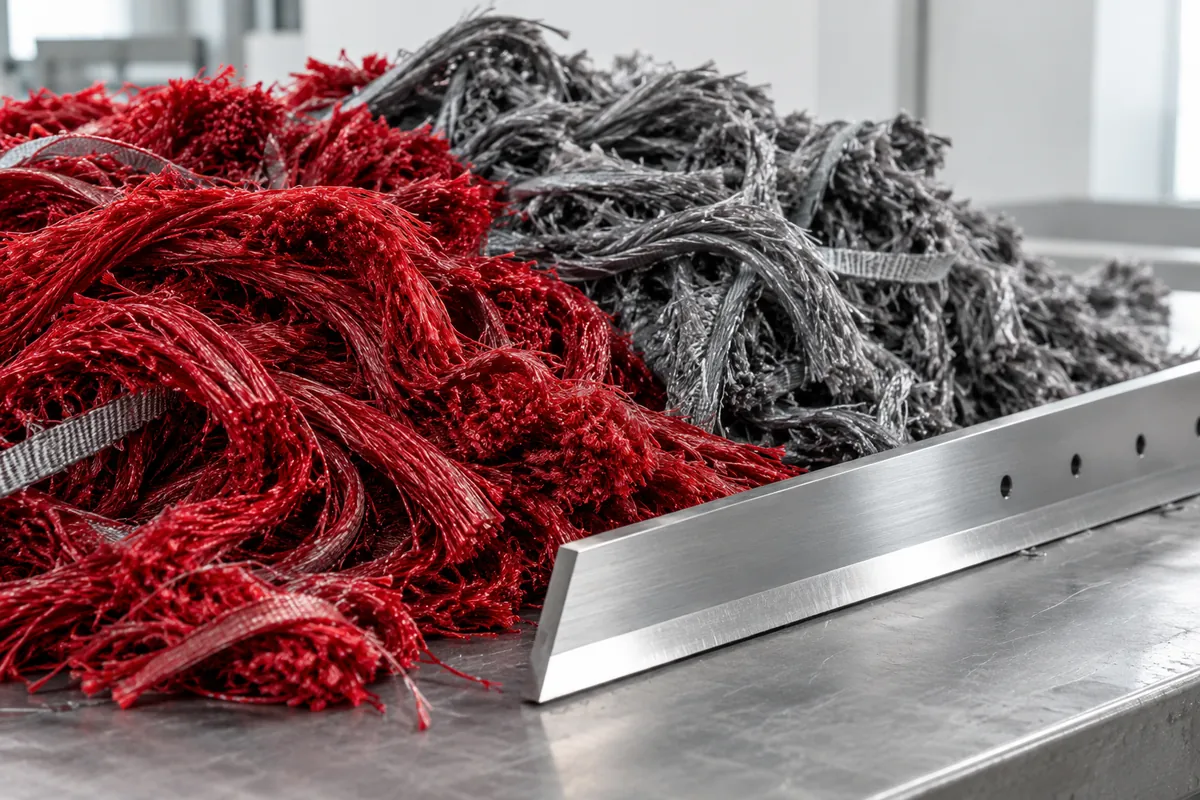
Whichever technology is chosen, the first stop for textile waste is almost always size reduction. On mechanical lines, cutting is needed to feed the opener evenly and preserve fibre length; the more consistent the cut length, the more controlled the opening. In chemical processes, reducing material to small, uniform pieces increases contact with the reactor or solvent, prevents blockages in feeding systems and makes it easier to separate hard parts such as zips and buttons.
Cutter selection should therefore be made together with the particle size the target process requires. Guillotine machines with adjustable cut length give flexibility when different buyers ask for different sizes. The MCT60 guillotine cutter, built in Gaziantep, for example, allows cut lengths to be set between 5 and 36 mm according to the manufacturer. Removing metal before cutting is a basic requirement on both routes to protect knives and downstream equipment.
Conclusion
Mechanical recycling remains the workhorse of the textile sector today, while chemical recycling is a promising but still maturing option for mixed and coloured streams. On both routes, success starts with well-sorted feedstock that has been cut to the right size and cleared of foreign bodies. For recycling plants, a sound strategy may be to raise mechanical output quality now while building a flexible pre-processing set-up that could supply chemical recyclers later.