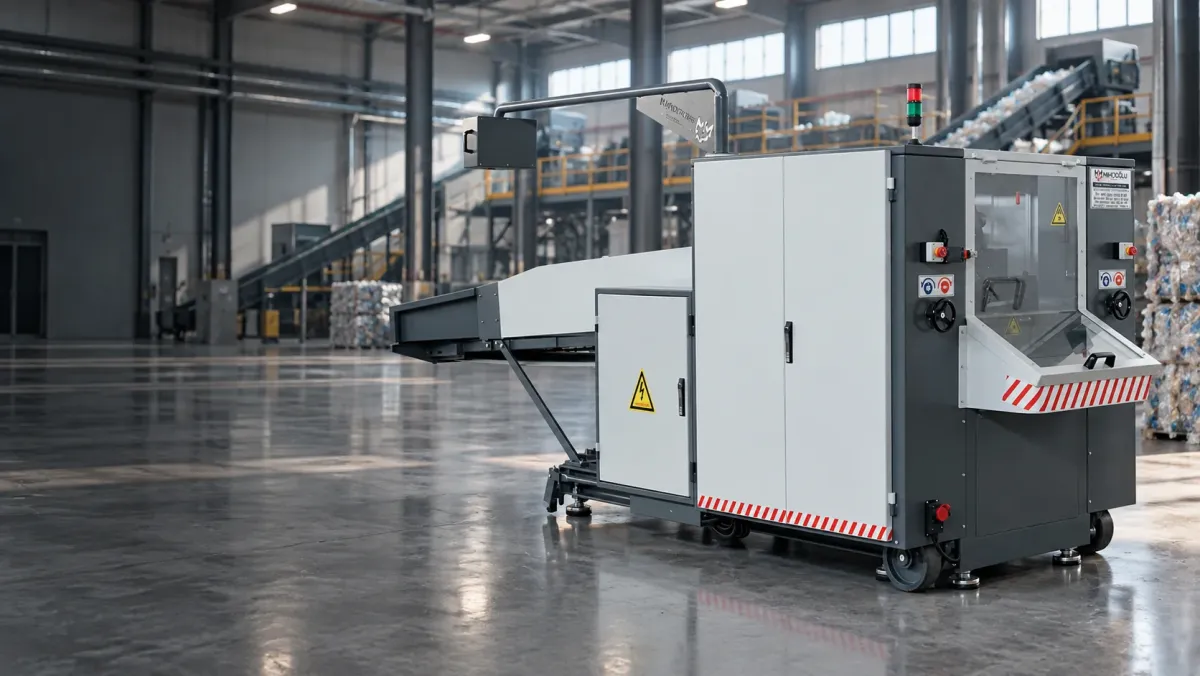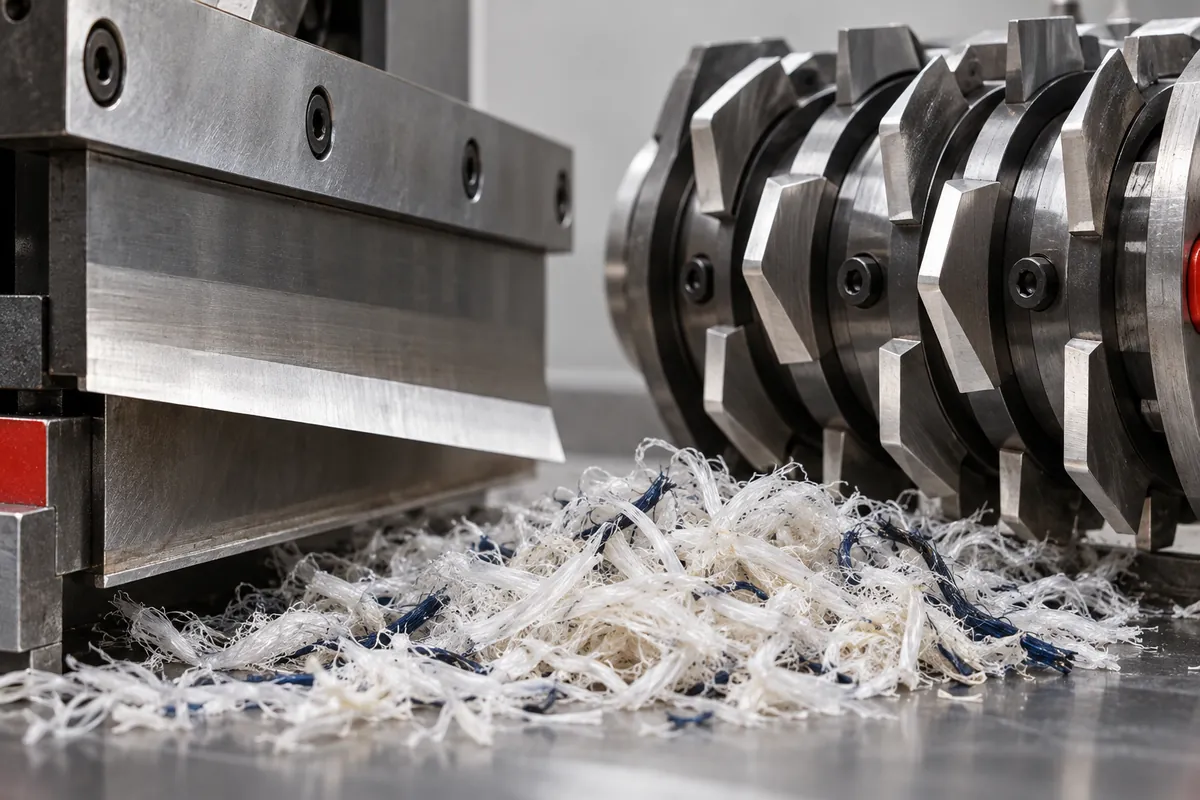

On guillotine and rotary cutting machines, the single most important component for performance is the blade. However powerful the machine, a dull knife cannot cut cleanly; it starts to crush and tear the material instead. The result is lower product quality, higher energy consumption and a line that stops more often. Given that much of the waste processed in textile and plastic recycling contains abrasive elements such as sand, dust, glass fibre or stray metal parts, blade maintenance should be treated not as a side task but as part of the production plan.
Signs of a dull blade
Blades rarely go dull overnight; they lose their edge gradually. That is why operators and maintenance teams need to recognise the following signs:
- Poorer cut quality: Crushed or frayed fibre ends and pieces that remain partly joined.
- Size distribution drift: Pieces noticeably longer or more irregular than the set cut length.
- Higher motor load: More current drawn for the same material and throughput, with energy use rising accordingly.
- Noise and vibration: Unusual knocking, rubbing sounds or vibration during cutting.
- Wrapping and blockages: Fibrous material winding around the knives or rotor, or building up at the infeed.
- Heat: Melt marks on cut plastic surfaces and unusual heating of blades and housing.
If several of these signs appear together, sharpening is due or overdue. Because an incorrect blade gap can produce similar symptoms, the gap setting should be checked before deciding to sharpen.
How to set sharpening intervals
There is no single sharpening interval that applies to every plant. The main factors are how abrasive the material is, how contaminated the waste is, daily operating hours and throughput, blade steel quality, and how effective the metal separation upstream of the cutter is. The soundest approach is to start from the recommendations in the manufacturer's manual and then refine the interval with your own data.
A simple method that works well in practice is a blade log: for each blade set, record the date fitted, the material and tonnage processed, operating hours, the sharpening date and the remaining blade width after sharpening. After a few cycles it becomes clear how long each material can be cut efficiently, and sharpening can be tied to planned stops. Keeping a spare blade set ready prevents the line from standing still while knives are being sharpened.
It is also worth remembering that blade life is finite. Every sharpening removes some material, so knives gradually become narrower. Blades that reach the minimum dimension specified by the manufacturer should be replaced, however sharp they look; otherwise the gap can no longer be set correctly and cutting safety suffers. A blade log also makes it possible to plan blade purchases in advance.
Sharpening done right: geometry, consistency and cooling
Sharpening is about more than restoring an edge. Good practice covers the following points:
- Keep the original geometry: Maintaining the cutting angle specified by the manufacturer is critical for cut quality and blade life.
- Remove material evenly along the length: If a long blade is not ground evenly from end to end, the edge loses its straightness and the blade gap cannot be set uniformly.
- Control heat: Overheating can cause the steel to lose hardness, so cooling during grinding matters.
- Re-set after fitting: Once a sharpened blade is refitted, the gap to the counter knife must be readjusted and a test cut carried out.
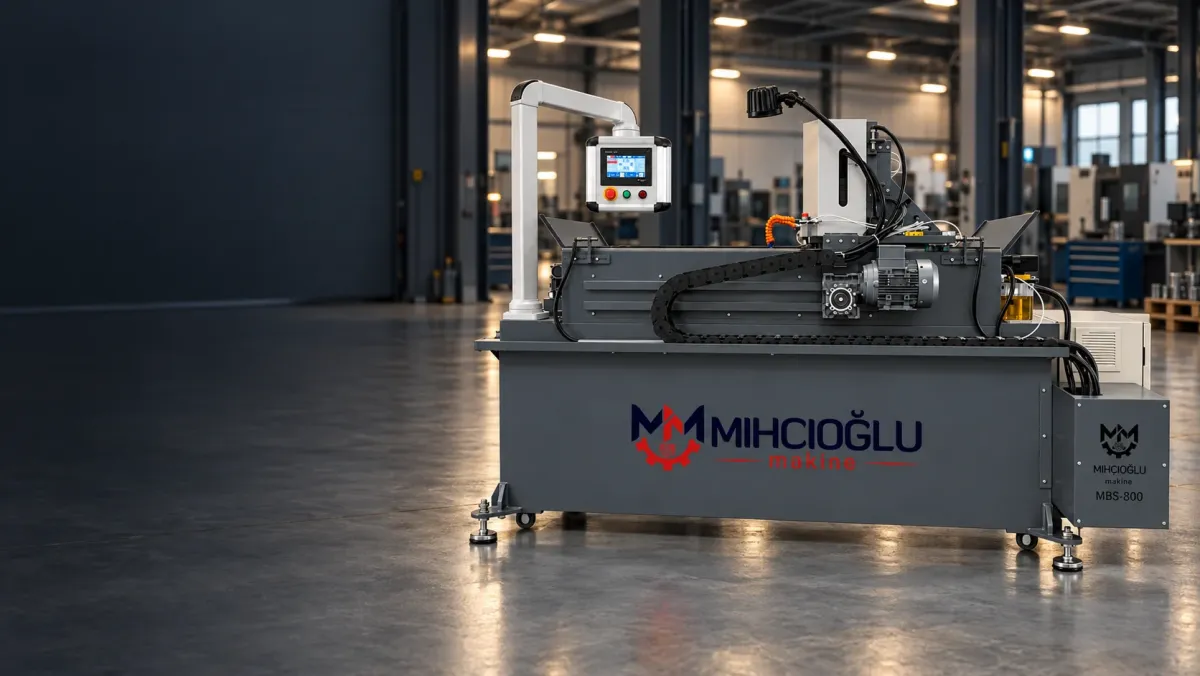
Achieving this consistency on long blades by hand or on general-purpose grinders is difficult, which is why plants with many knives and frequent sharpening often turn to a dedicated sharpening machine. The MBS-800 knife sharpening machine, for example, can handle blades up to 800 mm according to the manufacturer; its servo-driven grinding head travels on a linear rail, parameters are set via a PLC touchscreen, and it has automatic central lubrication and cooling. Machines of this kind allow guillotine and rotary knives to be sharpened in-house and repeatably, reducing reliance on outside workshops and the time blades spend in transit.
Safety during maintenance and sharpening
Blade changes and maintenance are among the moments when accidents on cutting machines occur most often. The basic rules are:
- Before working on the machine, all energy sources (electrical, pneumatic, hydraulic) must be isolated, locked and tagged. In the United States this practice is governed by OSHA's hazardous energy control standard (29 CFR 1910.147), which requires an energy control programme with written procedures, employee training and periodic inspections.
- Stored energy in parts such as flywheels or rotors can remain hazardous after the machine is switched off; guards should not be opened until a complete stop has been confirmed.
- Blades should be handled with suitable carrying fixtures and cut-resistant gloves, and stored on protected racks.
- Guards and spark shields on the sharpening machine must always be in place, and eye protection must be worn.
Conclusion
Blade maintenance directly affects both product quality and operating costs in a recycling line. Recognising the signs of dulling early, setting sharpening intervals from your own records, using a consistent method that preserves the original geometry and applying full energy control during maintenance are the foundations of sustained cutting performance. Working from a written guillotine maintenance checklist for daily and periodic checks is a practical way to turn that discipline into routine.