
Market size: the weight of polyester
To understand the recycled fibre market, start with total fibre output. According to Textile Exchange's Materials Market Report 2025, global fibre production reached an all-time high of 132 million tonnes in 2024, up from 125 million tonnes the year before. Synthetics account for 69% of production, and polyester alone for 59%, or around 78 million tonnes.
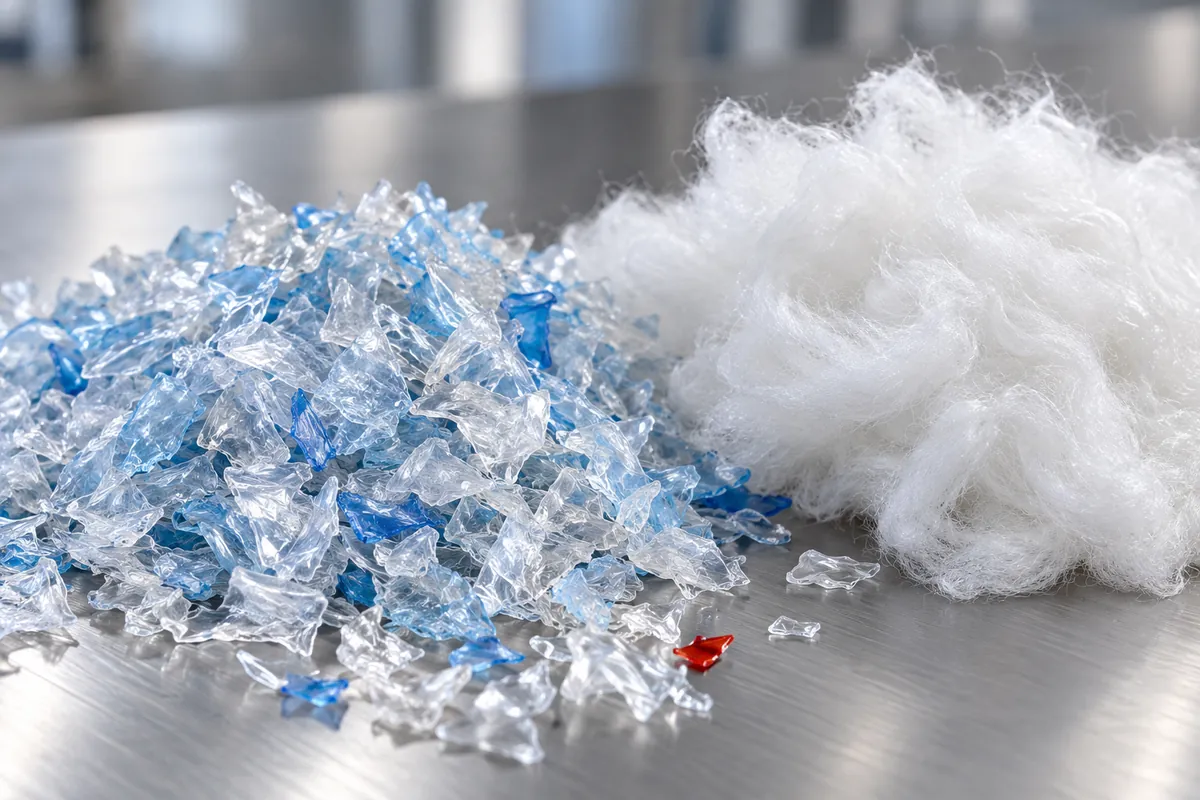
Recycled fibres make up 7.6% of the total. Most of that comes from recycled polyester made from PET bottles, which on its own represents 6.9% of all fibre produced. Fibre recovered from pre- and post-consumer textile waste accounts for less than 1%. As the summary on the EU Textiles Ecosystem Platform puts it, most recycled polyester still originates from plastic bottles rather than textile waste.
This explains why rPET fibre prices cannot be understood through textile dynamics alone: most of the feedstock comes from the packaging world, and the rules of that world feed straight into price.
The main price drivers
1. Virgin polymer prices
The closest substitute for recycled polyester is virgin polyester. Virgin PET and polyester fibre prices move with petrochemical feedstocks and therefore with oil and energy prices. When virgin material gets cheaper, the gap to recycled widens and cost-driven buyers may switch back to virgin. When virgin prices rise, recycled material becomes more competitive. Anyone tracking rPET prices should therefore also watch virgin polymer prices.
2. Bottle bale and flake supply
The main input for rPET is collected PET bottles. The reach of collection systems, deposit return schemes, sorting quality and bale contamination all shape both supply and cost. Food-contact packaging needs higher purity, so the cleanest fractions tend to go to bottle-to-bottle recycling, and fibre producers can find themselves competing with the packaging sector for them.
3. Regulation: mandatory recycled content
The EU Single-Use Plastics Directive (2019/904) requires PET beverage bottles to contain at least 25% recycled plastic from 2025. The Packaging and Packaging Waste Regulation (EU) 2025/40, which has applied since 12 August 2026, sets a 30% minimum recycled content for contact-sensitive PET packaging and single-use plastic beverage bottles from 2030, with higher rates for 2040. These obligations concentrate demand for food-grade rPET on the packaging side and can intensify competition for bottle-derived feedstock.
4. Brand commitments
Many apparel and home textile brands have set public targets to increase the share of recycled polyester in their products. These targets put a floor under demand, but brands' price sensitivity can slow progress when the gap to virgin widens. Certification of recycled-content claims and traceability are also becoming increasingly important when buyers choose suppliers.
5. Textile waste collection
In the long run, the biggest shift may come from textiles. According to the European Commission, around 12.6 million tonnes of textile waste were generated in the EU in 2019, and only one fifth was separately collected for reuse or recycling. The revised Waste Framework Directive, in force since 16 October 2025, gives Member States 30 months to set up extended producer responsibility schemes for textiles and footwear. As more textiles are collected, feedstock for textile-to-textile recycling will grow, which in turn will require investment in sorting, cutting and opening capacity.
The technical hurdle for textile-to-textile recycling
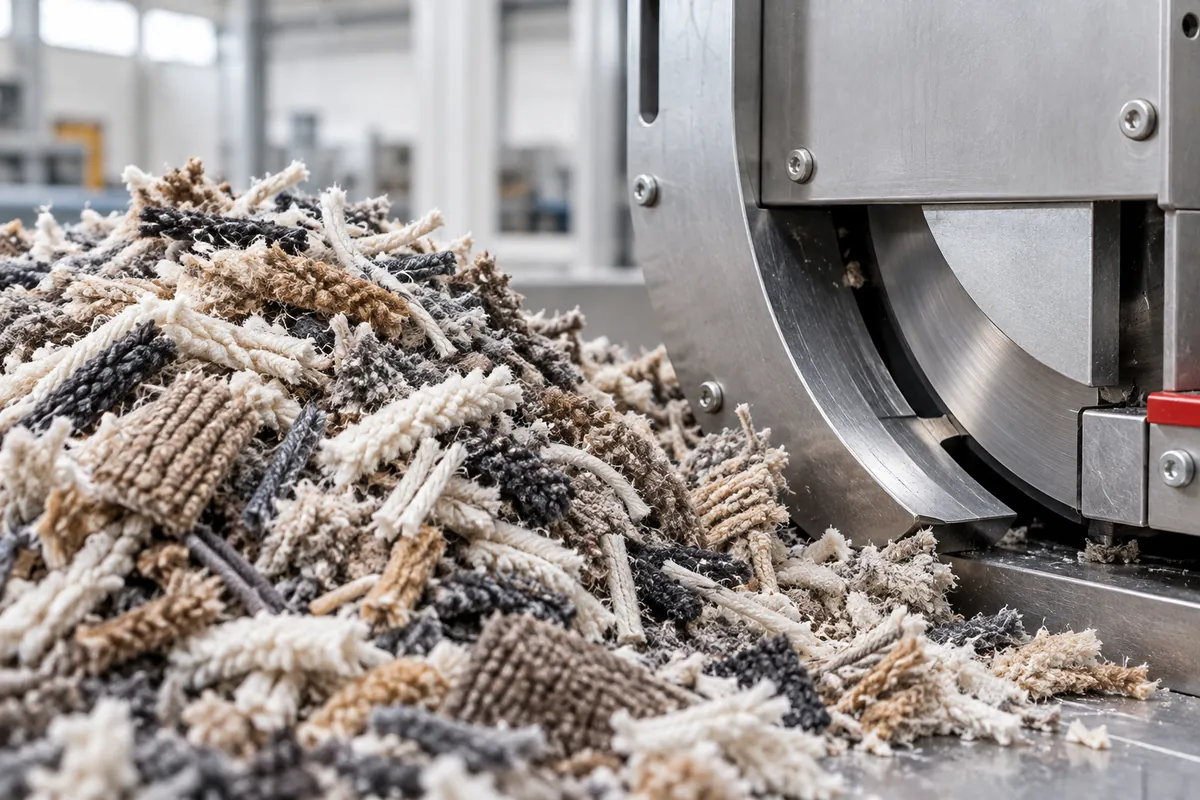
One reason bottle-based rPET dominates is that its feedstock is relatively homogeneous. Textile waste is far more challenging, with blended fibres and contaminants such as buttons, zips and prints. That is why pre-processing, meaning sorting, removing foreign matter and metal, and cutting to the right size, is the critical step for final quality. For a practical look at handling synthetic waste streams, see this guide on cutting polyester, nylon and carpet yarn waste.
What should buyers and investors watch?
- The virgin–recycled spread: when it widens, demand can shift back to virgin; when it narrows, recycled material gains ground.
- The regulatory calendar: the 2030 targets in the packaging regulation and national implementation dates for textile EPR schemes.
- Collection and deposit systems: feedstock supply and quality can change in markets where new schemes come on stream.
- Certification requirements: the traceability and recycled-content certificates that brands and retailers ask for.
Conclusion
The rPET and recycled fibre market is too layered to be explained by a single variable. In the short term, virgin polymer prices and bottle feedstock supply remain decisive. In the medium term, EU recycled-content mandates will lift demand on the packaging side, while producer responsibility schemes for textile waste open the door to a new feedstock source. For buyers and investors, the soundest approach is not to forecast prices but to monitor these drivers closely.