
Record machinery exports and rising unit values
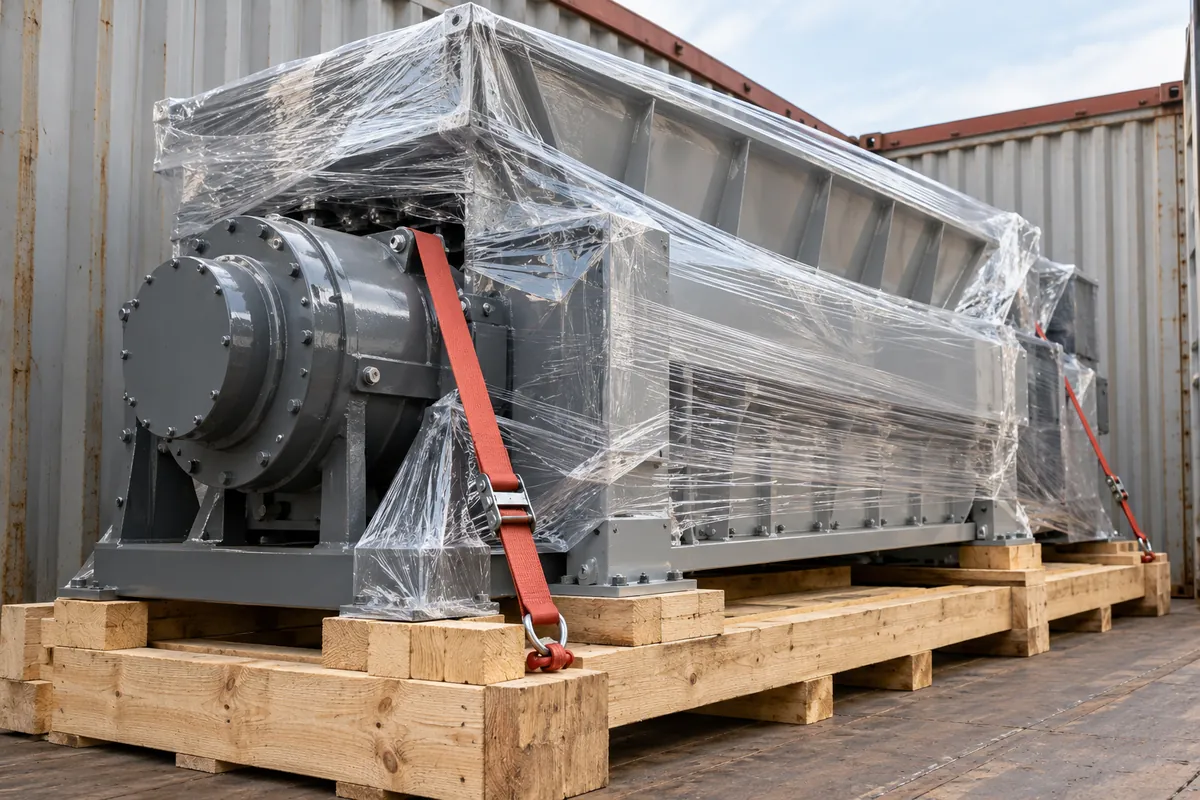
Türkiye's machinery industry closed 2025 with a record. According to reports based on data from the Machinery Exporters' Association (MAİB), consolidated machinery exports, including free zones, rose 1.9% year on year to USD 28.7 billion. The average export price per kilogram reached an all-time high of USD 8.1. Germany remained the largest market, with exports up 6.8% to USD 3.2 billion, while sales to the United States grew 9% to almost USD 2 billion.
Higher unit values suggest that the industry is moving towards more engineering-intensive products. Recycling machinery is a small but interesting part of that picture. Because trade statistics do not track recycling machines as a separate line, and such equipment falls under broader headings such as textile and plastics processing machinery, there is no official export figure for this sub-segment. The analysis below therefore focuses on the structure of the industry rather than on numbers.
Gaziantep: a clustered carpet and textile hub
According to the Gaziantep Chamber of Commerce's foreign trade bulletin, based on Turkish Exporters Assembly (TİM) data, the province exported around USD 10.1 billion in 2025. That equals 4.27% of Türkiye's exports and makes Gaziantep the country's sixth-largest exporting province. Asia accounted for 40.8% of its exports and Europe for 26.8%.
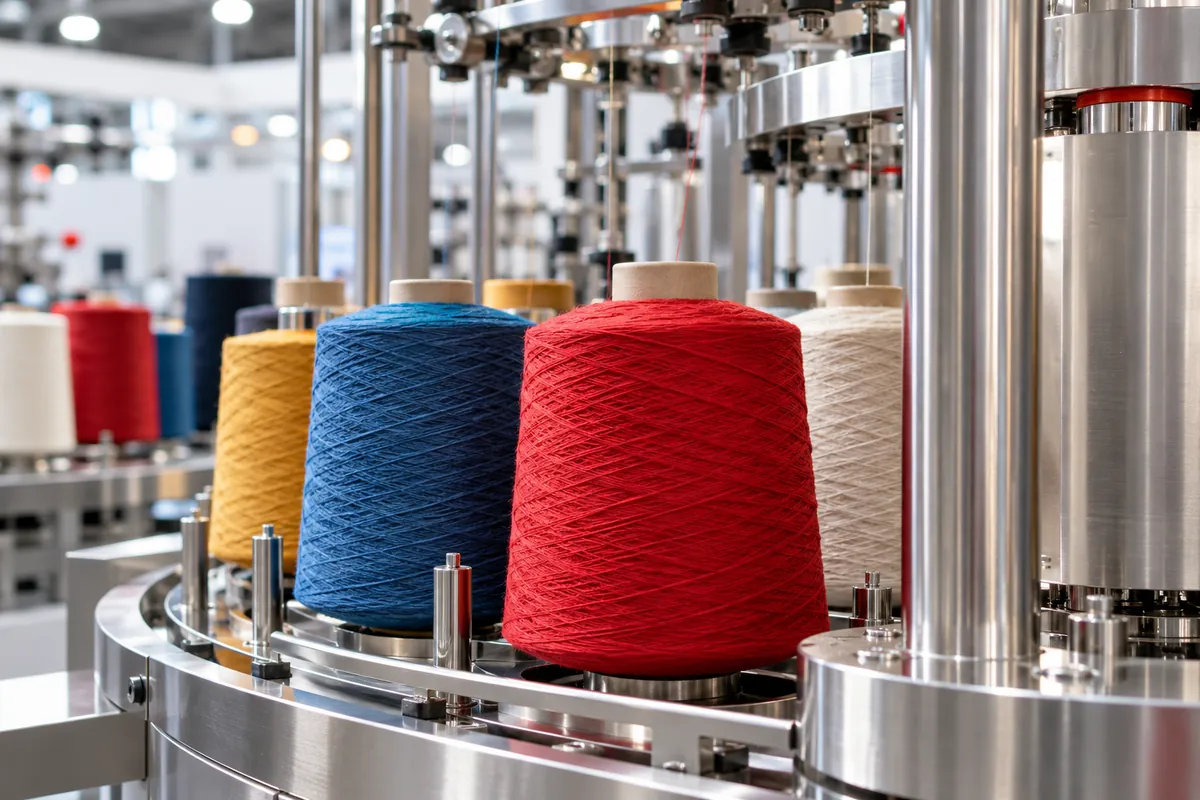
Carpets hold a special place in Gaziantep's industrial identity. The Turkish Ministry of Trade's Carpet Sector Report 2026 states that most of Türkiye's machine-made carpet production is carried out by companies based in Gaziantep, with Kayseri and Istanbul as the other main centres. The report points to the province's production infrastructure, cluster structure, skilled workforce and integrated production from yarn to finished product.
The same report puts Türkiye's machine-made carpet exports at USD 2.3 billion in 2025, down 2.1%. Global machine-made carpet exports stood at USD 9.1 billion, with Türkiye ranking second behind China with a 24.8% share.
From a carpet cluster to recycling machinery
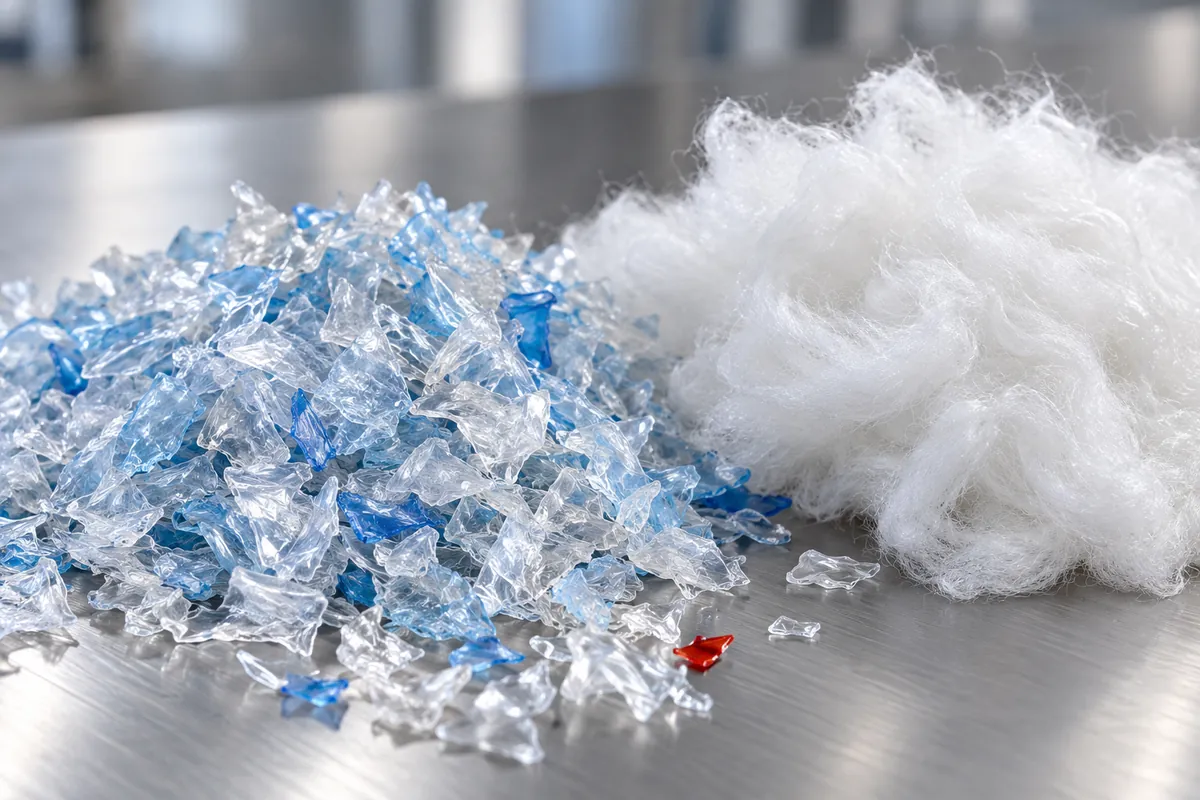
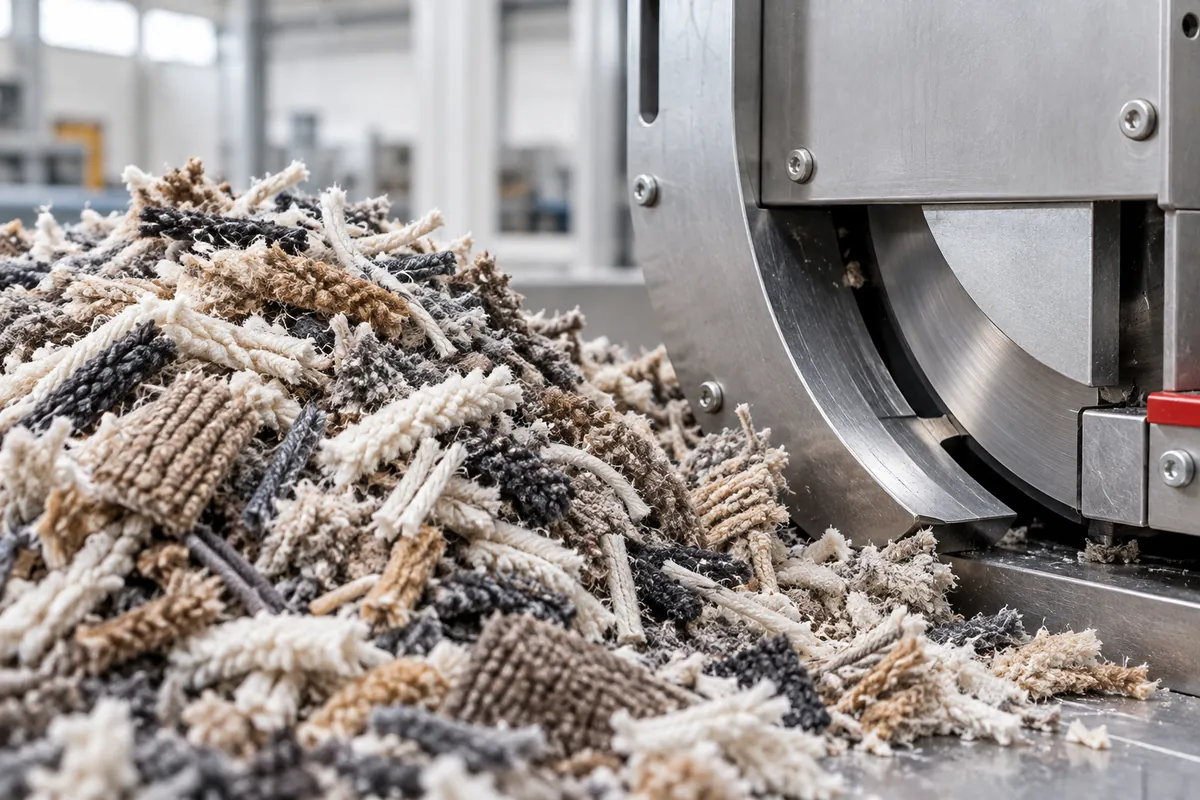
Large-scale carpet, yarn and weaving operations inevitably generate production waste such as yarn waste, edge trims and fabric offcuts. Turning that material back into fibre or feedstock creates demand for cutting, opening and conveying equipment. It is no surprise that this demand feeds local machine builders in Gaziantep: building machines in the same city as their users makes it easier to test on real waste streams, supply blades and spare parts quickly and feed user experience back into design.
One example of this model is Mıhçıoğlu Makine, active in Gaziantep since 1970. According to the company's own history, it entered the textile sector in 1984, later moved into plastics and began exporting in 2010. It now builds guillotine and rotary cutters, a knife sharpening machine, a carrier belt and a metal detector belt for textile and plastic recycling lines. For readers who want to see how such components fit together, the company's guide on setting up a textile waste recycling line is a useful starting point.
What is shaping demand?
EU textile waste rules
Europe, the largest market for Turkish machinery, is tightening its rules on textile waste. According to the European Commission, the revised Waste Framework Directive entered into force on 16 October 2025. Member States have 20 months to transpose it and 30 months to set up extended producer responsibility (EPR) schemes for textile and footwear products. The Commission notes that around 12.6 million tonnes of textile waste were generated in the EU in 2019, of which only one fifth was separately collected for reuse or recycling. Higher collection volumes will increase the need for investment in sorting and pre-processing capacity.
Proximity and service
Road access to Europe and the Middle East gives Turkish manufacturers an advantage on delivery times and service reach. Since recycling machines need a steady supply of blades, wear parts and technical support, after-sales service matters as much as price.
Risks
Currency volatility, access to finance and price competition from low-cost rivals remain the main risks for small and medium-sized machine builders. Growth based on higher unit value rather than higher volume offers more resilience against these pressures, but it requires continuous investment in R&D, certification and after-sales service.
Conclusion
Türkiye's machinery exports set records in 2025 in both value and unit price. In Gaziantep, the steady waste stream from carpet and textile production gives machines that process it a natural test bed and a local market. As collection volumes grow under the EU's textile waste rules, this user-driven manufacturing model could play a bigger role in exports. The lack of segment-specific official data, however, suggests that industry bodies would do well to track this sub-category separately.